The Story of Quinsigamond Village: Indigenous Roots, Industry & Resilience
Long before the wire mills hummed, the Nipmuc people fished these waters and named this land. Discover the Indigenous origins, the Swedish wire-mill ironworkers, the mill strikes, the 1974 grassroots uprising, and five decades of neighbors protecting neighbors.
The Nipmuc People & the Pickerel Fishing Place
Long before any wire mill or factory stood on this ground, the land along Lake Quinsigamond and the Blackstone River belonged to the Nipmuc people — an Algonquian-speaking nation whose territory spanned central Massachusetts. The name Quinsigamond itself comes from the Algonquian language and translates to "the pickerel fishing place," a reference to the seasonal fishing camps the Nipmuc maintained along the lake and river systems that still define this landscape today.
English colonial records first documented the area as the "Village of Quinsigamond" or "Quinsigamond Plantation" in 1637. By 1684, English settlers had renamed the broader region Worcester, but the village's original Nipmuc name endured — a rare and powerful acknowledgment of Indigenous presence that persists over 380 years later.
The waterways that sustained Nipmuc communities for millennia would later power the industrial revolution that transformed this village. The same rivers that provided fish and transportation routes became the energy source for iron mills and wire factories. Understanding this continuity — from Indigenous stewardship to industrial economy to modern mutual aid — is central to understanding who we are.
Land Acknowledgment
Quinsigamond Village Community Center sits on the ancestral homeland of the Nipmuc people. We honor their enduring connection to this land and the waterways that gave this village its name. The Nipmuc Nation continues as a living community in Massachusetts today.
Etymology & Timeline
Pre-Colonial Era
Nipmuc fishing settlement at Lake Quinsigamond. Seasonal camps for pickerel, hunting, and trade along waterways.
1637
First English colonial documentation as "Quinsigamond Plantation" — the Algonquian name preserved in writing.
1684
English settlers rename the broader area Worcester, but the village keeps its original Nipmuc name.
Early 1800s
Irish laborers arrive to build the Blackstone Canal. The industrial era begins along the same waterways the Nipmuc had fished for centuries.
Why "Quinsigamond" Matters
The Algonquian word Quinsigamond — "the pickerel fishing place" — is one of the oldest surviving Indigenous place names in active daily use in Massachusetts. Every time someone says the name of this village, they speak an Algonquian word that predates English colonization by thousands of years.
Sources: Holy Cross Library Indigenous Studies Guide; Via CAD Worcester Neighborhoods; Worcester Telegram & Gazette historical archives.
Washburn & Moen and the Wire That Strung the Nation
In the late 19th century, South Worcester transformed from pastoral farmland along the Blackstone River into one of the greatest manufacturing engines on Earth. Under the leadership of Ichabod Washburn and Philip Moen, the Washburn & Moen Manufacturing Company established its sprawling South Works facility at the intersection of Millbury and Ballard Streets, bordering Quinsigamond Village.
Later absorbed into the American Steel & Wire Company and United States Steel, the South Works mills hummed around the clock. Over 5,000 workers drew the high-tensile wire that fenced the American Western frontier, forged the cables for the transatlantic telegraph, and provided the piano wire and suspension bridge strands that connected modern America.
Historic Documentation: Recorded in the Library of Congress Historic American Engineering Record (HAER No. MA-134).
Working Conditions: 12-hour shifts in blistering heat, blast furnaces, and acid pickling baths that forged deep bonds of immigrant brotherhood.
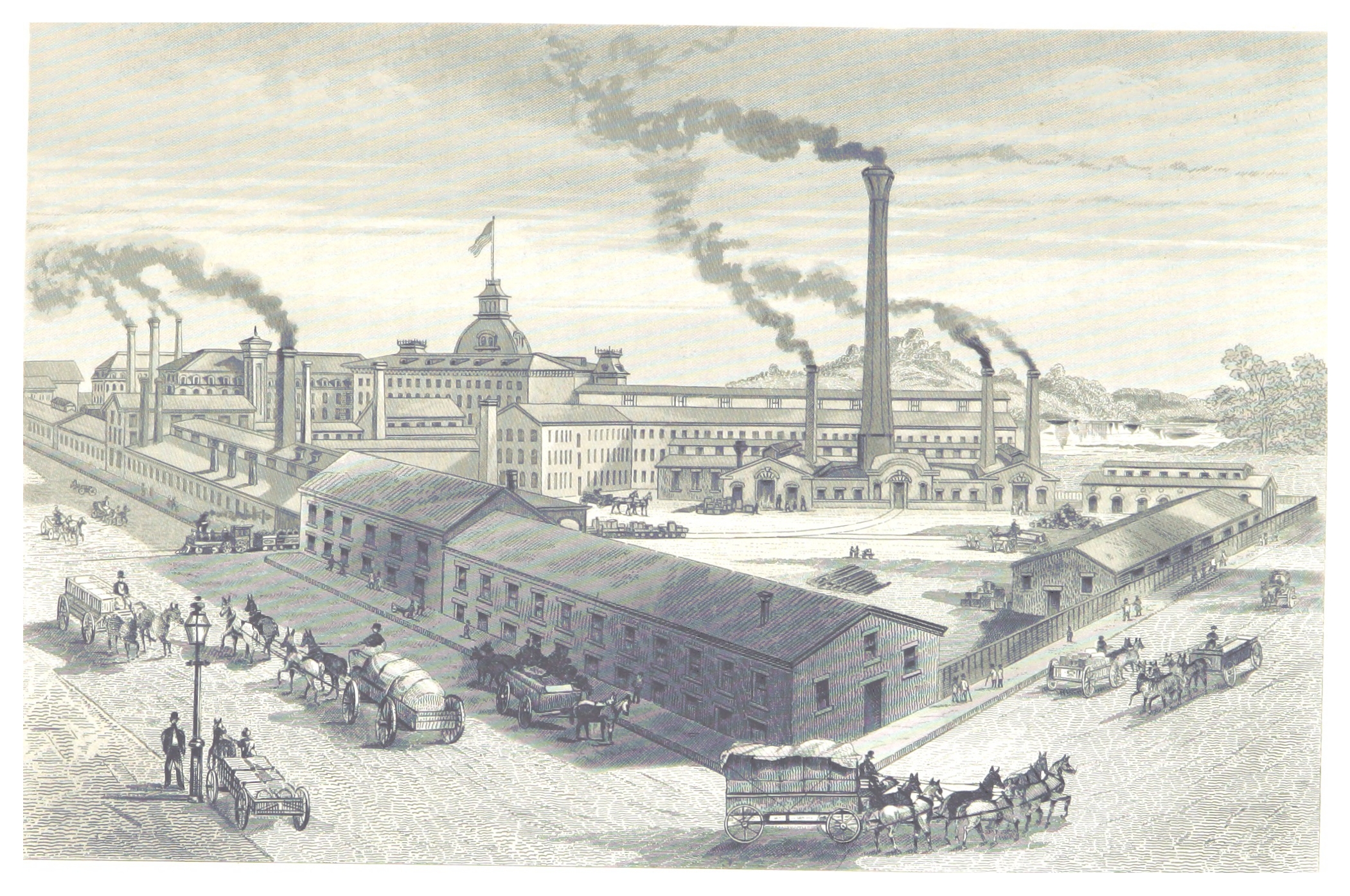
1876 Benson Lossing Steel Engraving
Washburn & Moen wire mills in Worcester (British Library / Library of Congress HAER MA-134 collection).
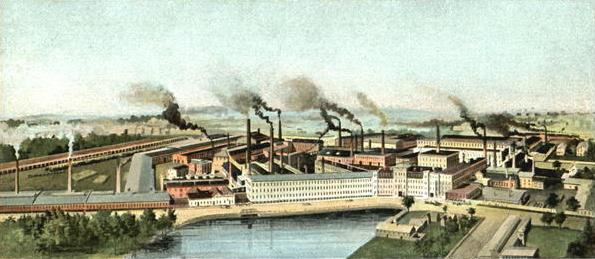
c. 1905 Color Postcard (Worcester Mills)
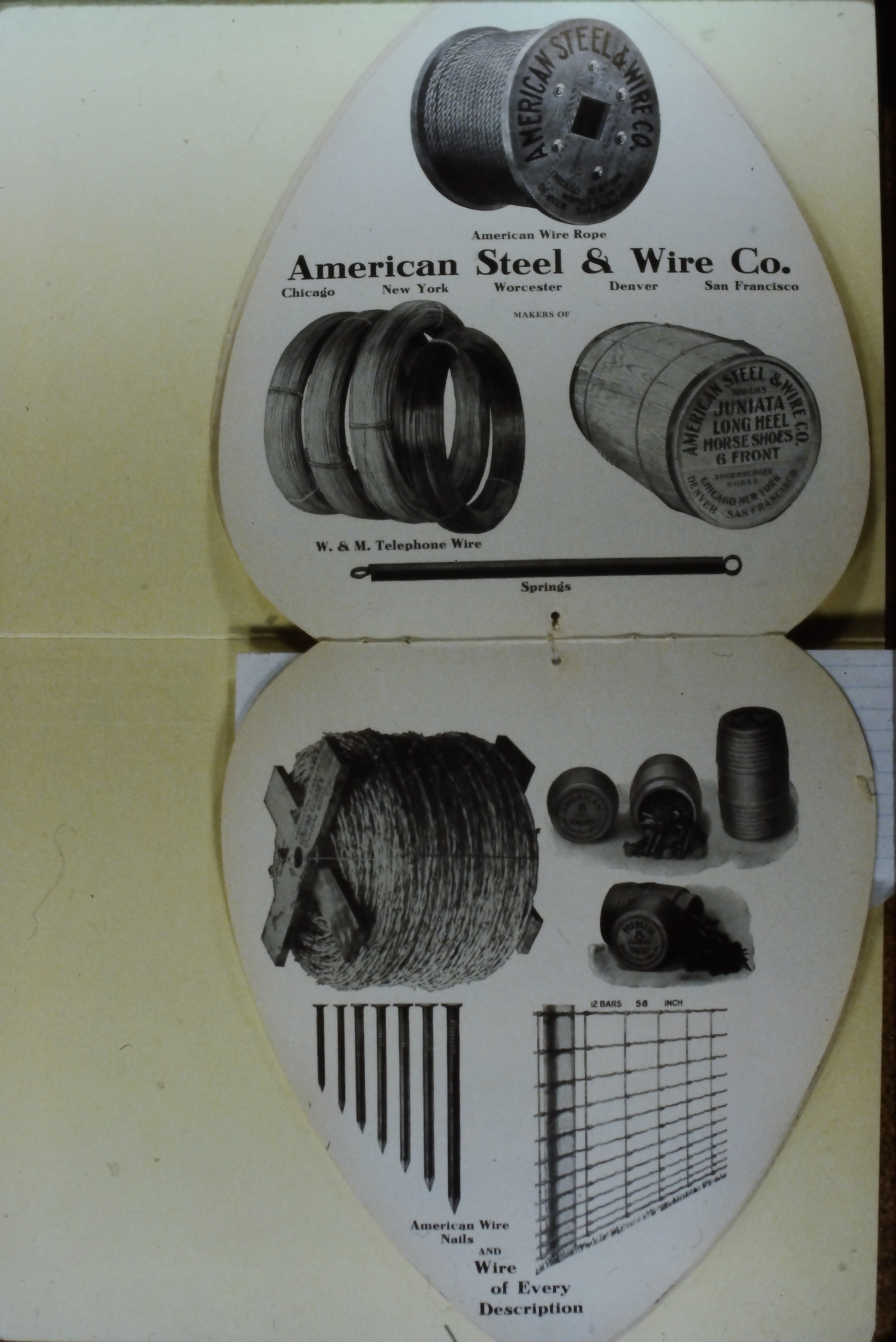
1909 Wire Catalog (Barbed & Cable Wire)
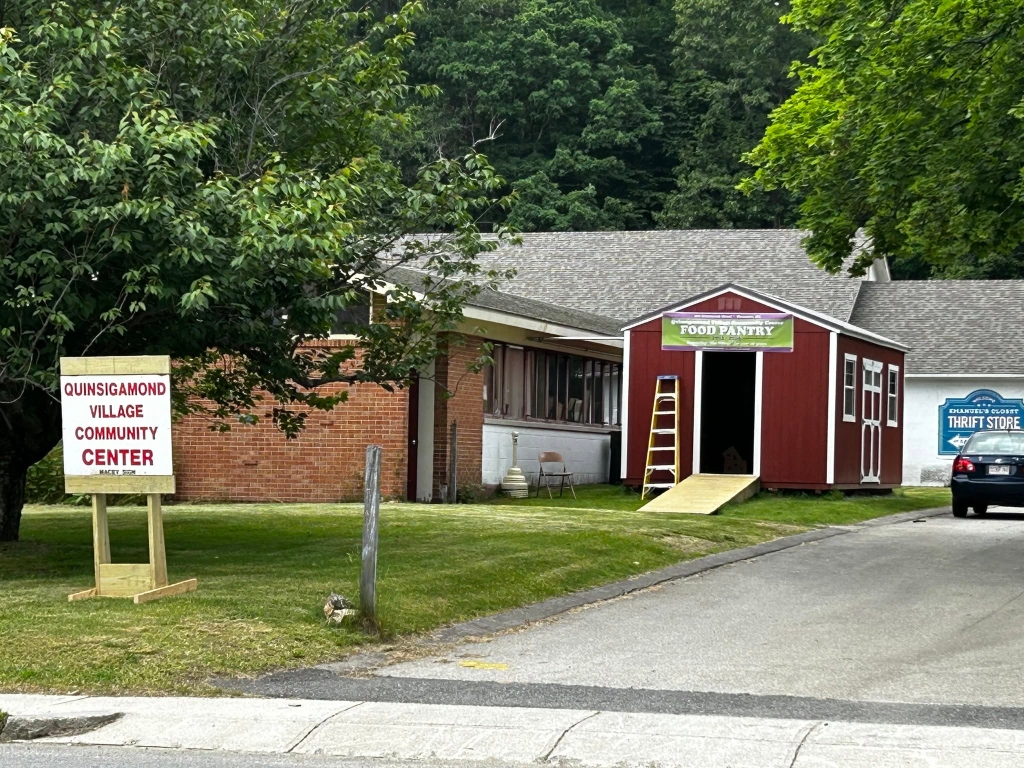
200 Greenwood Street Campus
Emanuel Lutheran Church (Est. 1896) hosting QVCC Food Pantry today.
"Swedeville" and the Tradition of Mutual Care
Between 1870 and 1910, thousands of skilled Swedish metallurgical workers, blacksmiths, and machinists arrived in Worcester, recruited directly to man the wire mills. Quinsigamond Village became known affectionately as "Swedeville."
Along Greenwood Street and Whipple Street, Swedish-language bakeries, fraternal lodges, and sick-benefit societies sprouted. In 1896, neighborhood families gathered to build Emanuel Lutheran Church at 200 Greenwood Street.
Over 130 years later, that very church campus serves as the permanent home of the Quinsigamond Village Community Center Food Pantry—preserving unbroken a multi-century tradition of sanctuary, mutual aid, and neighborly love.
1974: When the Mills Closed, Neighbors United
By the late 1960s and 1970s, deindustrialization hit Worcester. As wire operations scaled down and blast furnaces cooled, South Worcester families faced unprecedented layoffs, economic dislocation, and acute food hardship.
The Economic Layoffs
As global steel production shifted, thousands of high-wage wire manufacturing jobs in Quinsigamond Village disappeared. Families who had lived in the neighborhood for generations found themselves without income or food.
The Neighborhood Uprising
Refusing to let their community fall into decay, neighborhood mothers, retired ironworkers, and church pastors met in church basements to pool food, clothing, and funds. They decided that South Worcester would care for its own.
501(c)(3) Incorporation (1974)
In 1974, the Quinsigamond Village Community Center officially incorporated as an independent 501(c)(3) non-profit, establishing a permanent food pantry, senior wellness program, and emergency family safety net.
The Village Story: 150 Years of Mutual Aid in South Worcester
From 19th-century Swedish wire-mill ironworkers to today's mobile pantry delivery routes, Quinsigamond Village has always been defined by neighbors helping neighbors.
A Decade of Steadfast Leadership (2012–Present)
Alison Mallett assumes program directorship. Over 13+ years of service (honored with the 10-Year Civic Award in 2022), Alison guides QVCC through economic recessions, supply-chain shocks, and emergency pandemic relief, tripling pantry capacity and building deep institutional alliances.
Historical Preservation
QVCC maintains the official 50th Anniversary Heritage Mural and community archives at 200 Greenwood Street.
Alison Mallett: 14+ Years of Unwavering Devotion
In 2012, Alison Mallett assumed the helm of QVCC. Over the past 14 years, Alison has guided the organization through some of the most difficult periods in modern history—including the economic fallout of 2020, inflation spikes, and the physical campus relocation.
Under Alison’s leadership, QVCC never missed a single week of food distribution during the pandemic. She established the groundbreaking Worcester Housing Authority doorstep mobile delivery routes to 38 Lewis Street, forged deep alliances with the Worcester County Food Bank, and secured the new campus at 200 Greenwood Street.
Official Civic Citation (June 12, 2022):
"Presented to Alison Mallett for her many years of service to the residents of Worcester at the Quinsigamond Village Community Center. She assumed the mantle and created a neighborhood gem where all are welcomed and offered food, friendship, and help."
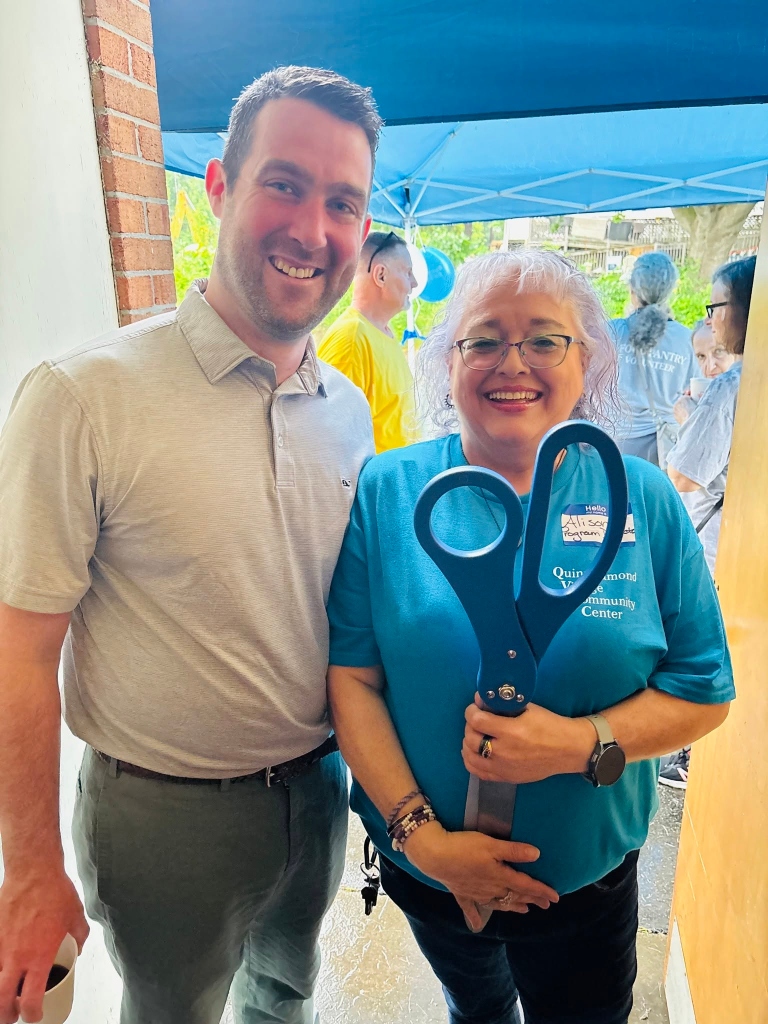
Ribbon Cutting Ceremony (June 10, 2025)
Alison Mallett with MA State Rep. Daniel M. Donahue holding the ceremonial ribbon-cutting scissors at 200 Greenwood St.
How Your Support Solves Real Village Needs
Operational insight into the everyday challenges facing South Worcester families and seniors, and how QVCC\'s programs deliver direct, dignified relief at 200 Greenwood St.
Bridging the Summer Food Gap for School-Aged Children
Hundreds of children in South Worcester depend on free or reduced-price breakfasts and lunches throughout the school year. When classes pause from late June through August, families face an unexpected monthly grocery deficit exceeding $400 per child.
Working single parents and dual-income households with multiple growing children struggle to absorb the sudden cost of 10 additional meals per week per child during summer break.
Every Thursday morning, QVCC provides child-friendly nutrition boxes loaded with hearty cereals, whole grain breads, peanut butter, string cheese, fresh seasonal fruit, and shelf-stable proteins.
Provides weekly child-friendly nutrition boxes throughout 10 weeks of summer break
4x Wholesale Food Power
Gifts leverage wholesale bulk purchasing through Worcester County Food Bank.
100% Tax-Deductible 501(c)(3)
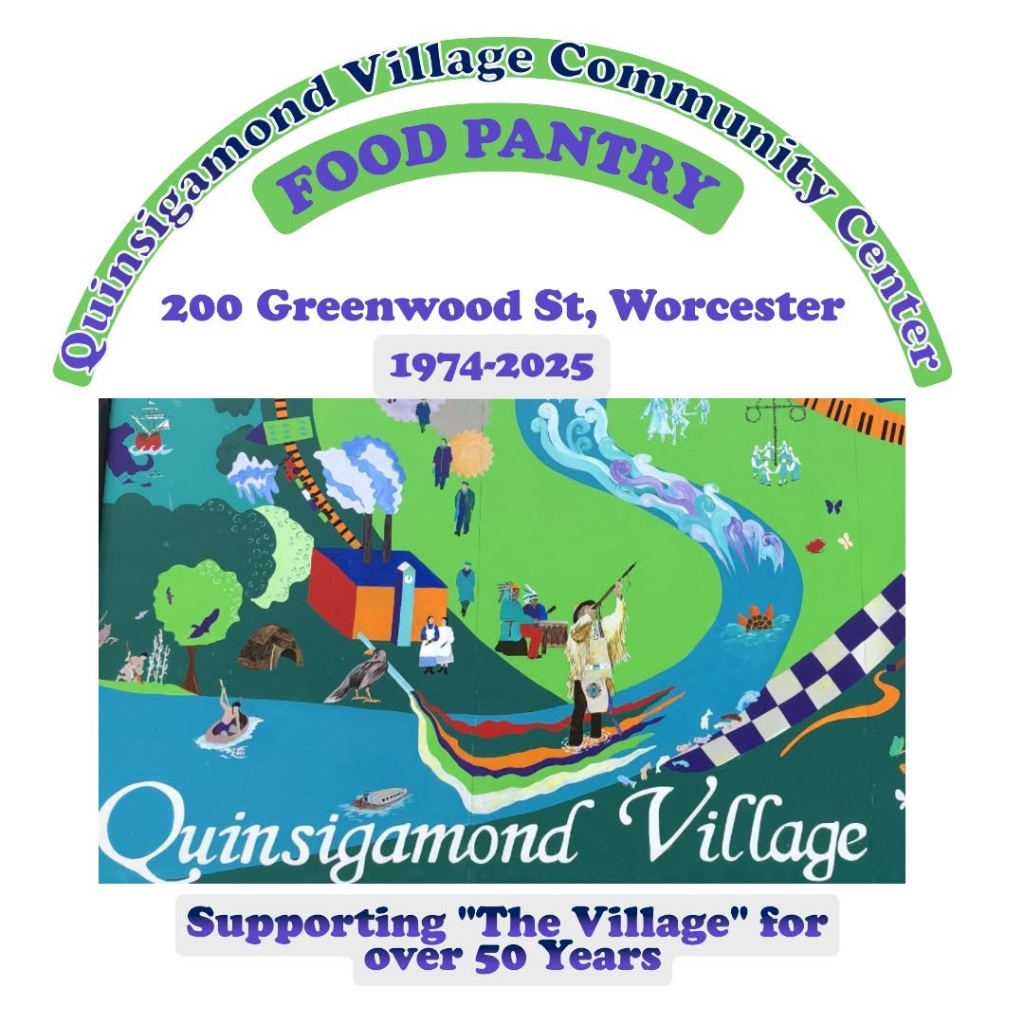
The 50-Year Commemorative Heritage Mural
“The 50-Year Heritage Mural celebrates QVCC’s service to the Village since 1974. The accompanying history traces the neighborhood’s longer industrial, immigrant, and community story.”
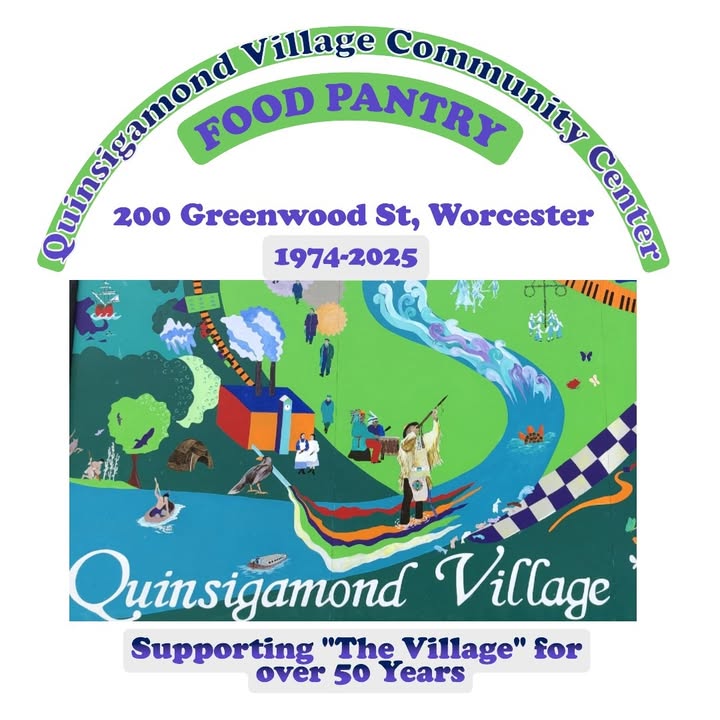
The commemorative mural displayed on the QVCC campus at 200 Greenwood Street. Visual motifs depict the Nipmuc waterway heritage, the brick smokestacks of American Steel & Wire, Scandinavian immigrant workers, and 50 continuous years of grassroots food security.
Primary Archival Sources & Citations
To ensure historical integrity, QVCC distinguishes verified archival public records from community oral recollections. This narrative is grounded in the following primary institutional holdings:
- Library of Congress (HAER MA-134): Historic American Engineering Record survey documentation of the American Steel and Wire Company South Works industrial complex.
- Benson J. Lossing (1876): History of American Industries and Manufacturing, documenting early water-powered rolling mills along the Blackstone River corridor.
- Worcester Historical Museum: South Worcester demographic records, labor union records from the 1887 and 1907 mill strikes, and Scandinavian settlement maps.
- Commonwealth of Massachusetts: M.G.L. Chapter 180 Articles of Incorporation for Quinsigamond Village Community Center, Inc. (1974 / 1983).
- Emanuel Lutheran Parish Archives: Congregation records founded in 1896 by Swedish wire workers, documenting 130 years of sanctuary at 200 Greenwood St.
Public Viewing & Campus Access:
Neighbors, educators, students, and historians are welcome to visit the mural during regular campus hours (Mon–Thu 9:30 AM–3:00 PM) at 200 Greenwood Street, Worcester MA.
How to Cite This Historical Record:
Quinsigamond Village Community Center. "The Story of Quinsigamond Village (1637–2026)." quinsigamondvillage.com/history#mural, 2026.For high-resolution photographic permissions, school curriculum visits, or archival inquiries, contact info@quinsigamondvillage.com.
The Quinsigamond Village Heritage Trail
Explore the living history of South Worcester. Walk or drive this 5-stop historic trail tracing 150 years of wire-making, Swedish immigrant culture, and grassroots mutual aid.
Emanuel Lutheran Church & QVCC Campus
200 Greenwood Street, Worcester MA
Founded in 1896 by Swedish wire mill artisans. Today hosting QVCC's active food pantry and the commemorative 50-Year Heritage Mural depicting the industrial smokestacks and village workers.
American Steel & Wire South Works (HAER MA-134)
Millbury & Ballard Streets
The historic Washburn & Moen / AS&W complex documented in the Library of Congress. Over 5,000 men drew wire for the Brooklyn Bridge, the first transatlantic cable, and barbed wire that settled the American West.
Blackstone River & Historic Canal Corridor
Blackstone River Bikeway Corridor
The 1828 Blackstone Canal transported raw iron and coal from Providence up to Worcester, creating America's first industrial canal valley and powering early Quinsigamond forges.
Greenwood Park & Athletic Field
Greenwood Street
The civic heart of "Swedeville." For over a century, immigrant workers gathered here for mill baseball leagues, Swedish soccer clubs, children's parades, and neighborhood solidarity rallies.
Swedish Worker Triple-Deckers (Whipple & Stebbins Streets)
Whipple, Forsberg, & Stebbins Streets
Notice the distinctive wooden architectural flourishes on the three-decker homes built between 1885 and 1915. Swedish mill carpenters customized their front porches and roof gables with Scandinavian fretwork, creating generational equity for working-class families.
Help Us Write the Next 50 Years of Village History
The mills may be gone, but the spirit of Quinsigamond Village lives on in every family fed, every child supported, and every neighbor treated with dignity.